India's business story in 2026 is not being driven by one industry.
Several different trends are moving at the same time.
Companies are raising money through IPOs. Businesses are adopting AI. D2C brands are becoming more focused on profitability. Gold-backed lending is attracting large financial players. Global companies continue to expand their capability centres in India.
Put these trends together and a bigger picture appears: Indian businesses are becoming more digital, more capital-conscious and more connected to global markets.
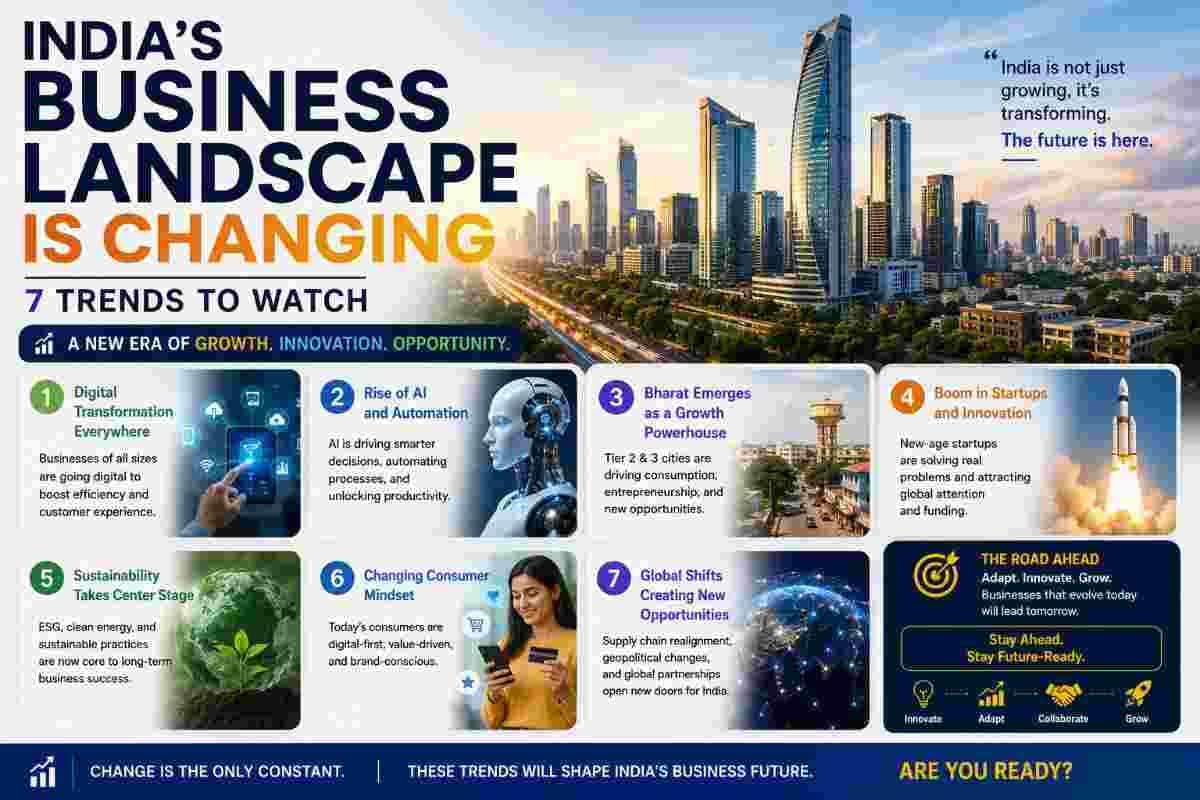
Here are seven trends worth watching.
1. AI is moving from experiments to operations
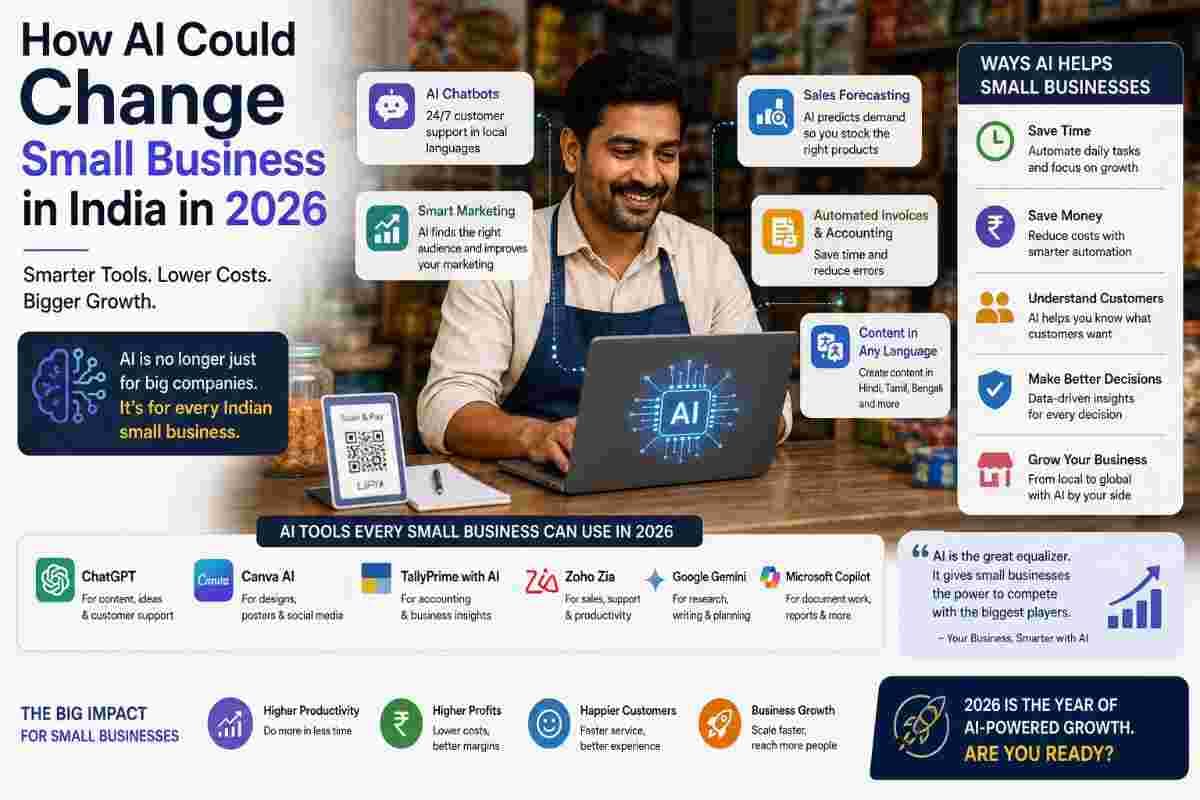
AI is becoming part of everyday business workflows.
Deloitte's 2026 India research found that Indian enterprises are ahead of global peers in at-scale AI adoption across several functions.
The next question is return on investment.
Companies will increasingly measure AI by the time saved, revenue created and costs reduced.
2. The IPO market is getting busy again
August has been a particularly active month for India's primary market.
More than 20 mainboard companies had raised over ₹20,850 crore by late August, according to recent market reporting.
The activity is partly driven by companies that delayed IPO plans earlier in the year and are now using a more supportive fundraising window.
For investors, this means more choices.
It also means more research.
3. D2C brands are becoming more disciplined
India's D2C market is entering a more mature phase.
The focus is shifting from rapid customer acquisition and funding headlines toward repeat purchases, margins and sustainable growth.
That does not mean consumer startups are slowing down.
It means they are becoming more careful about how they grow.
4. Gold loans are becoming mainstream finance
Gold-backed lending is attracting major financial companies.
The reason is straightforward: India has a huge pool of household gold, while borrowers need flexible access to credit.
As larger players enter the category, competition is likely to increase.
Technology and digital onboarding could become important differentiators.
5. Startup investors want stronger business models
Funding is still available, but investors are becoming more selective.
A startup now needs to explain more than its market size.
It needs to explain customers, revenue, retention, margins and the path to sustainable growth.
That could make the ecosystem healthier over time.
6. Global Capability Centres are expanding
India's GCC market continues to be an important source of business activity.
Recent reporting showed GCC office leasing in India rising strongly in the first half of 2026, with Bengaluru leading the market.
These centres are no longer simply low-cost back offices.
Many now handle technology, product development, analytics, finance and other high-value functions.
That makes GCC expansion important for both the office market and India's broader services economy.
7. Businesses are becoming more selective about growth
This may be the trend connecting everything else.
Whether it is a startup, D2C brand, bank or listed company, businesses are paying closer attention to efficiency.
Growth still matters.
But profitable growth matters more.
Investors want evidence.
Customers want value.
Companies want better productivity.
That pressure can lead to stronger businesses.
What does this mean for entrepreneurs?
The environment is competitive, but it is also full of opportunities.
AI can reduce operating costs.
Digital channels can help small brands reach national customers.
Formal credit can support business expansion.
Global companies can create demand for Indian technology and professional services.
But the old strategy of “grow first and figure out the economics later” is becoming harder.
The bottom line
India's business landscape is entering a more mature phase.
The next winners may not always be the companies growing the fastest.
They may be the companies that combine growth with strong economics, technology with practical execution and ambition with discipline.
For entrepreneurs and investors, these seven trends are worth watching—not because every trend will produce a winner, but because together they show where India's business environment is heading.
1. AI is becoming part of everyday operations
The AI conversation has moved from curiosity to implementation.
Companies are testing AI in customer service, software development, marketing, analytics and internal workflows.
The next challenge is measuring the return.
Businesses that can connect AI use to lower costs, faster service or higher revenue will have a stronger case for expanding adoption.
2. IPO activity is giving businesses another route to capital
India's primary market has become much busier in August.
A strong IPO pipeline gives established businesses a way to fund expansion while giving investors access to new companies.
The quality of the cycle will depend on whether newly listed companies deliver after the initial excitement.
3. D2C is becoming more disciplined
Consumer startups are learning that sales growth is not enough.
Repeat customers, margins and inventory management are becoming central.
This may produce a healthier D2C sector where brands are built around real customer loyalty instead of advertising alone.
4. Gold loans are moving into the mainstream
Gold-backed credit is attracting both traditional specialists and larger financial groups.
India's household gold base makes the opportunity unusually large.
The challenge will be balancing growth with responsible lending and clear customer communication.
5. Startup investors want evidence
Funding still matters, but the market is becoming more selective.
Revenue, retention, unit economics and runway now matter much more in conversations between founders and investors.
That may make the startup ecosystem less flashy but more durable.
6. GCCs are becoming higher-value operations
Global Capability Centres are no longer simply about reducing labour costs.
Many are handling engineering, product, analytics, finance and other specialised functions.
That creates demand for skilled workers and supports India's position as a global business-services hub.
7. Growth is being judged by quality
Across sectors, the same idea keeps appearing.
Growth is valuable when it produces stronger economics.
A business that increases sales while losing more money with every customer has a different future from one that grows more slowly but becomes more efficient.
That distinction is becoming central to how investors and managers evaluate companies.
What entrepreneurs should take from these trends
The common thread is discipline.
Technology creates new possibilities, but execution decides which companies benefit.
Capital is available, but investors want evidence.
Consumers are spending online, but they have more choices.
Credit is expanding, but borrowers still need to manage risk.
Global companies are expanding in India, but the jobs being created increasingly require specialised skills.
The opportunity is therefore large, but it is not automatic.
What could shape the rest of 2026
The business environment will continue to respond to interest rates, global trade, oil prices, technology adoption, domestic demand and government policy.
Some trends will accelerate.
Others will lose momentum.
That is normal.
Businesses that stay close to customers, watch their costs and adapt quickly will be better positioned than those that depend on one trend continuing forever.
The bottom line
India's business landscape is becoming more mature.
The next phase is likely to reward companies that combine technology with practical execution, growth with healthy economics and ambition with discipline.
For investors, founders and business readers, the most useful approach is not to chase every headline.
It is to understand the forces behind the headline.
That is where the real business story usually begins.
A practical way to think about business trends India 2026
The easiest mistake when reading business news is to look for a single number that explains everything.
Markets and businesses rarely work that way.
A headline can tell you that activity is rising, but it does not tell you whether every company in the sector will benefit. A funding announcement can show that investors are interested, but it does not prove that the business will become profitable. A new technology can create a major opportunity, but implementation can still fail.
The useful habit is to connect the headline to the underlying business model.
Who is paying?
Why are they paying?
What does it cost to serve them?
What could make the economics better or worse?
What changes if the market becomes more competitive?
Those questions are useful whether you are an investor, entrepreneur or simply someone trying to understand India's economy.
The other important habit is to separate a trend from a guarantee.
A trend tells us where activity is moving. It does not tell us exactly where the next winner will come from.
That distinction is particularly important in fast-moving areas such as technology, IPOs, startups and financial services. New companies can grow quickly, but competition can also appear quickly. Regulations can change. Consumer preferences can shift. Capital can become more expensive.
For readers, this means the most valuable business stories are not necessarily the ones with the most dramatic headlines.
They are the stories that explain what changed, why it changed and what could happen next.
That is the lens through which this trend should be viewed.
What readers should watch next
Over the coming months, pay attention to the practical signals behind the trend.
Look for companies reporting real revenue growth rather than only announcing plans. Watch whether customers continue using a product after the initial launch. Look at whether businesses can improve margins as they scale. Notice whether investment is creating new capacity, new jobs or new products.
Also watch what happens when the market becomes less supportive.
A strong business should have a strategy for difficult periods, not only good ones.
That is often where the difference between a genuine long-term trend and a short-lived boom becomes visible.
For India, the broader opportunity remains significant. A large domestic market, a growing digital economy, improving infrastructure and an increasingly connected business ecosystem create room for new companies and new business models.
But opportunity alone is not enough.
Execution will decide who benefits.
Disclaimer: This article is for informational purposes only and is not investment, financial or business advice.