Cricket is played in three main international formats, and they produce strikingly different games despite sharing the same basic rules. If you're new to following the sport, here's what actually separates them.
Test cricket
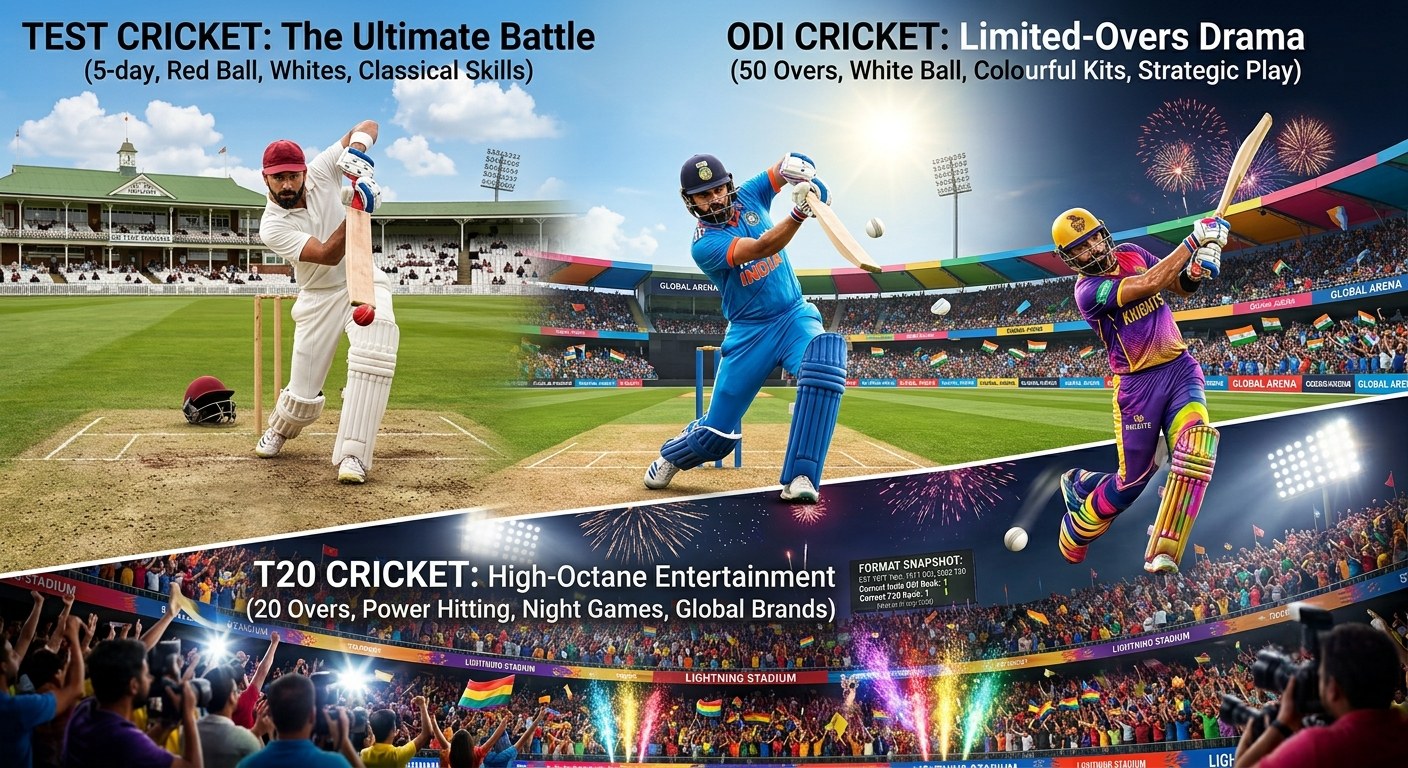
The longest format, played over up to five days with two innings per side. Teams bowl with a red ball, players wear white clothing, and there is no limit on the number of overs an innings can last — an innings ends when ten wickets fall or the batting captain declares.
Because there is so much time, Test cricket rewards patience and endurance. A batter may face a hundred deliveries to score thirty runs and that can still be a valuable contribution. Conditions change across five days as the pitch wears, which is why the toss and the weather matter more here than anywhere else.
Crucially, a Test can end in a draw — if neither side manages to bowl the other out twice within five days, nobody wins. That possibility shapes tactics throughout.
One Day Internationals (ODIs)
Each side bats once, for a maximum of 50 overs. Played with a white ball in coloured clothing, usually completed in a single day.
ODIs sit in the middle ground. There's enough time to build an innings, but the overs limit means a batting side can't simply occupy the crease — they have to score. Fielding restrictions during the early overs (commonly called the powerplay) limit how many fielders can be placed on the boundary, which encourages aggressive starts.
Twenty20 (T20)
Twenty overs per side, typically finished in about three hours. This is the format most domestic leagues, including the IPL, are built around.
With so few deliveries available, nearly every ball is an attacking opportunity or a defensive necessity. Bowlers are limited to a maximum of four overs each, so captains have to think carefully about when to use their best options. Strike rate matters far more than batting average, and specialist roles — the death-overs bowler, the finisher — have become central to team selection.
How the formats compare
| Test | ODI | T20 | |
|---|---|---|---|
| Length | Up to 5 days | One day | ~3 hours |
| Innings per side | Two | One | One |
| Overs limit | None | 50 | 20 |
| Ball | Red | White | White |
| Draw possible | Yes | No (tie possible) | No (tie possible) |
The takeaway
The same players can look like entirely different cricketers across formats, because each one rewards a different skill set. Test cricket tests technique and stamina, T20 tests power and nerve, and ODIs sit somewhere in between. None is a lesser version of the others — they are genuinely different games sharing a rulebook.